
Balcony Privacy Screens: How to Choose, Measure and Install One
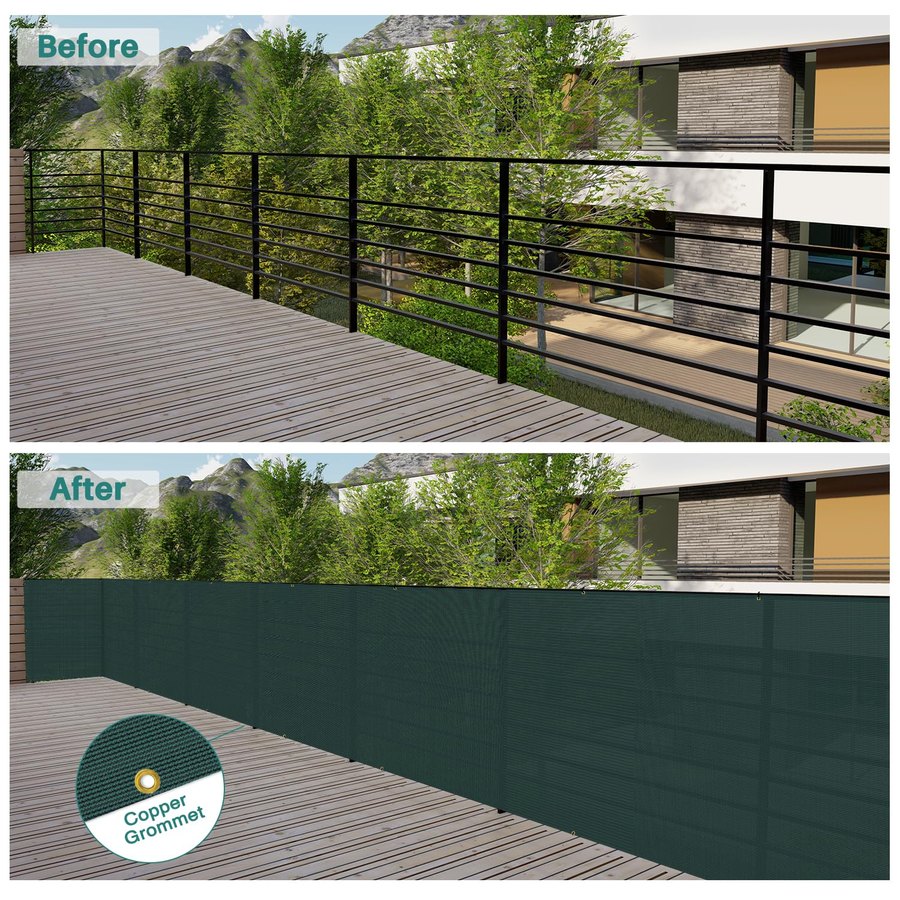
Most balconies have the same problem: the railing is open, and everything beyond it can see in. A neighbor's window, the walkway below, the next building over. A privacy screen fixes that for a small price and without a contractor, but it only works well if you plan around three things: who can actually see you, how the screen will be fastened, and what the weather will do to it. This guide walks through each one, then shows what we sell and how to put it up.
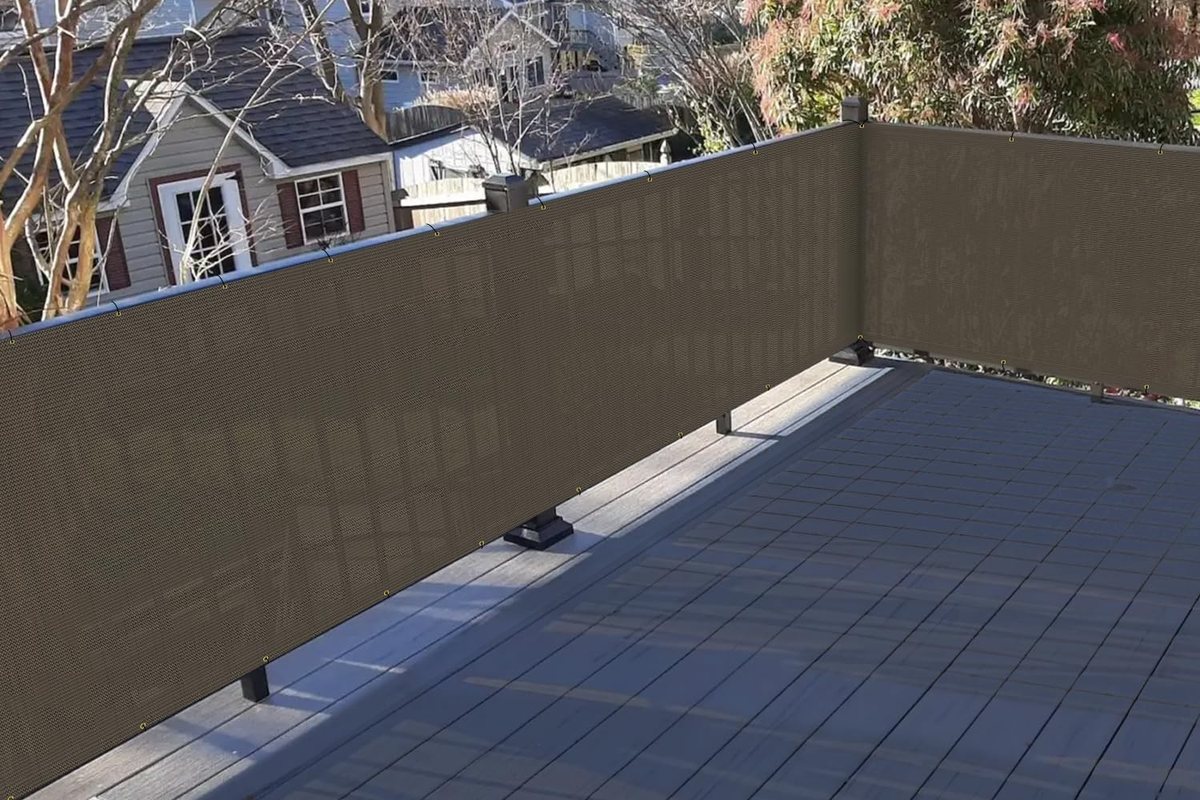
1. Read the rules before you buy
Renters and condo owners should look at the lease, the HOA handbook or the building rules before anything else. Common restrictions include no drilling into the railing or wall, limits on color, and a ban on anything that hangs past the edge of the balcony. Some buildings also want sprinkler heads, utility boxes and exterior doors kept clear.
A screen that is tied on with zip ties is easy to live with here. It makes no holes, and when you move out you cut the ties and take it with you. If the rules are unclear, ask in writing and keep the reply.
One practical check at this stage: does your railing give the ties something to wrap around? Posts, balusters and a top rail do. A plain solid wall or a sheet of glass does not, and this tie-on method will not work there.
2. Work out who can see you
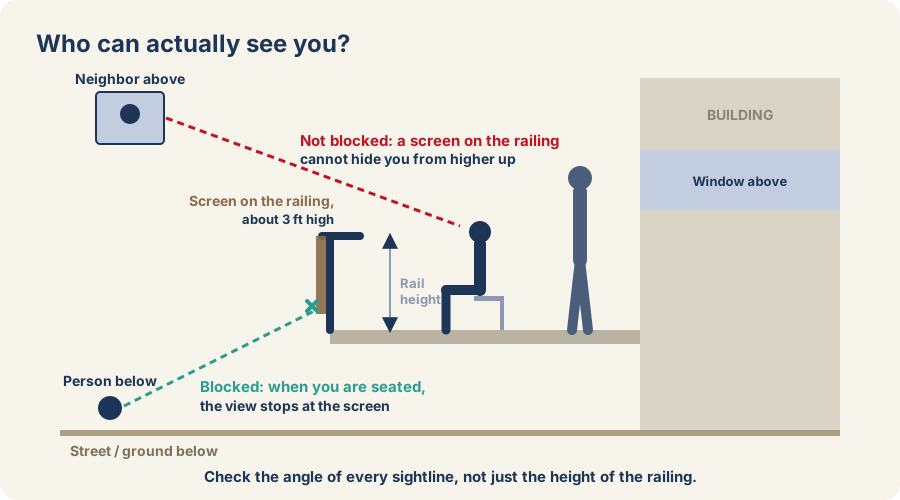
Before choosing a size, sit where you normally sit and look at where the stares come from. Someone on the street below sees through the railing at an upward angle, and a screen on the railing stops that view when you are seated. A neighbor on a higher floor looks down over the top of the screen, and no railing screen changes that.
That is why the height matters. Our deck screens are sold at 2.5 ft (listed as 30 inches) and 3 ft (listed as 35 inches). Compare that with your railing: many are somewhere around 3 to 3.5 ft, but measure yours. A screen is a visual filter for the railing line, not a wall that rises to head height.
Set expectations accordingly. A mesh screen cuts down what people can make out. It is not fully opaque, and at night an indoor lamp near the railing can throw silhouettes outward. If evening privacy matters to you, move lights and seating away from the screen.
3. Pick the screen and the color
The balcony deck screens we sell are made from 200 GSM high-density polyethylene (HDPE) mesh. GSM means grams per square meter. The mesh is breathable, so air passes through the panel, which matters on an upper floor where a closed sheet would catch the wind like a sail. The listing describes the fabric as UV-blocking, reinforced with 1.5-inch webbing and copper grommets.
The weight is the same on both heights, so your real choices are height, length and color.
What we offer
| Option | Photo | What it is | Think of it for |
|---|---|---|---|
| Deck privacy screen, 2.5 ft high See the 2.5 ft screens | 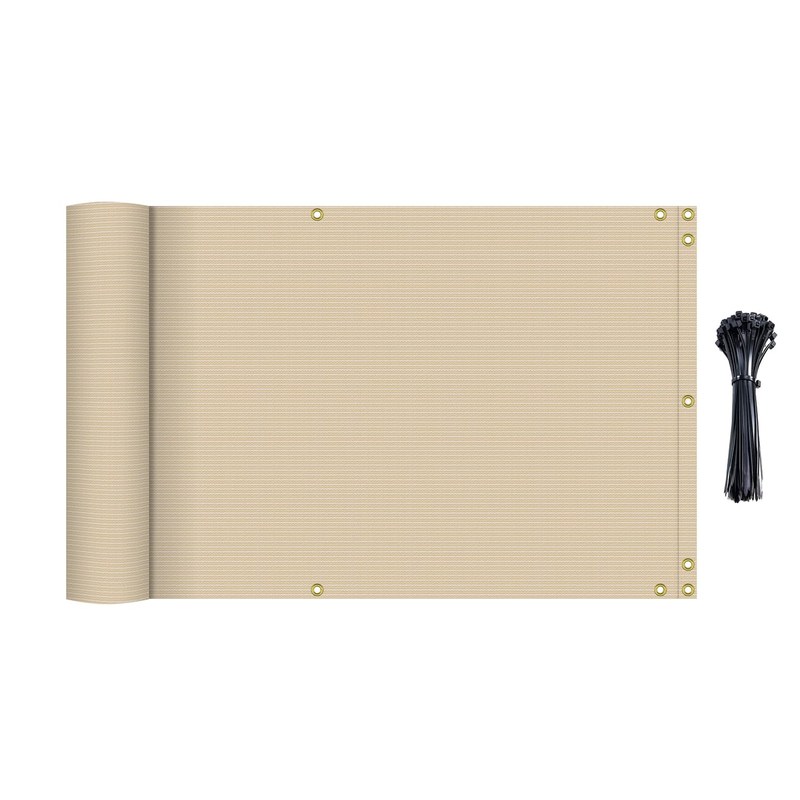 | 200 GSM HDPE mesh, listed height 30 inches. Choose the length in 1-foot steps, from 1 ft up to 300 ft, in black, brown, light grey or yellowish beige. | Low railings, or a lighter look. |
| Deck privacy screen, 3 ft high See the 3 ft screens | 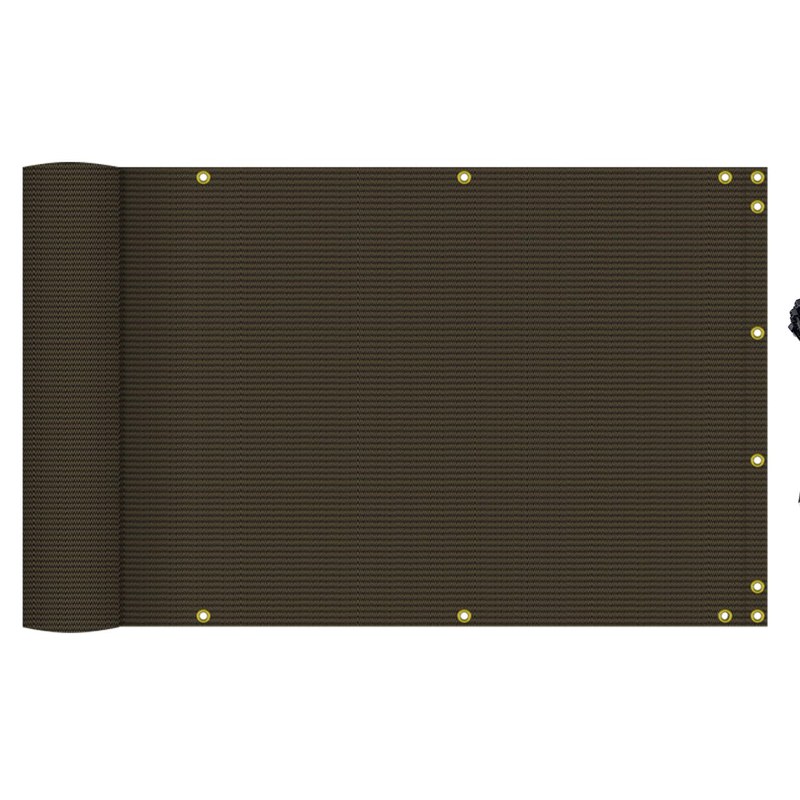 | The same 200 GSM HDPE mesh, listed height 35 inches. Lengths from 1 ft up to 320 ft, in nine colors and stripe patterns. | Most balcony railings, and the widest choice of colors. |
Both heights are part of the deck screen range. Pick a color and a length on the product page: 2.5 ft or 3 ft. What is available can vary by length, so the product page is the final word.
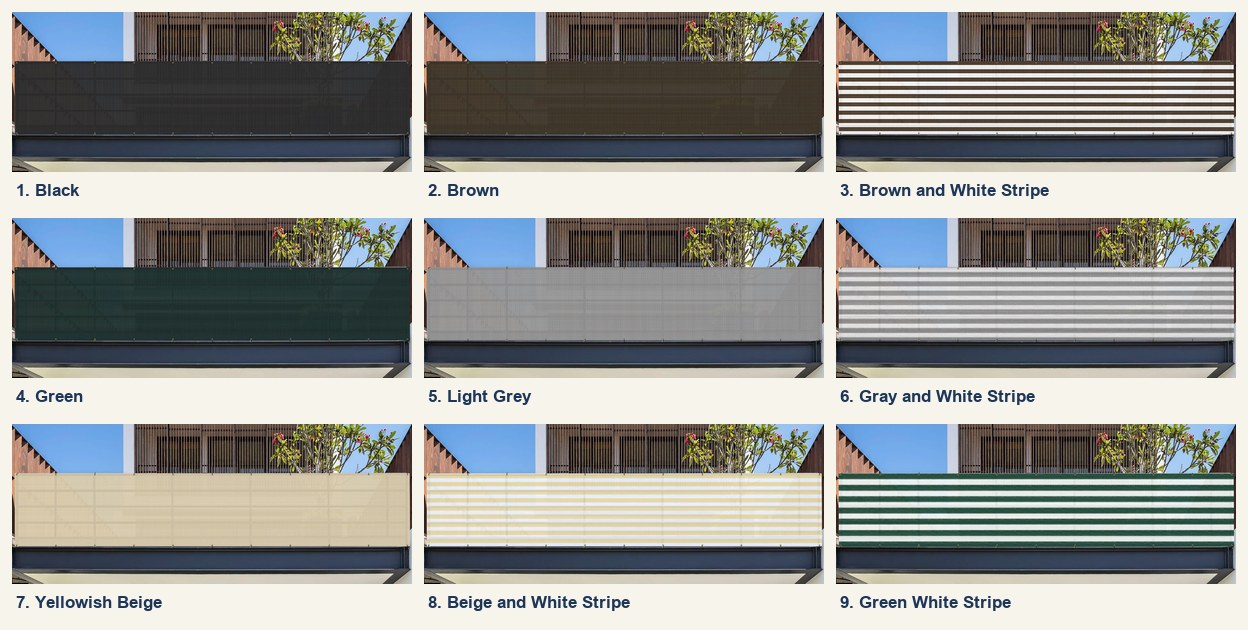
Dark colors tend to fade into the background and make a busy railing look calmer. Light colors and stripes brighten a shaded balcony but show dust and pollen sooner. Check your building's color rules first, then think about how much cleaning you want to do.
4. Measure run by run
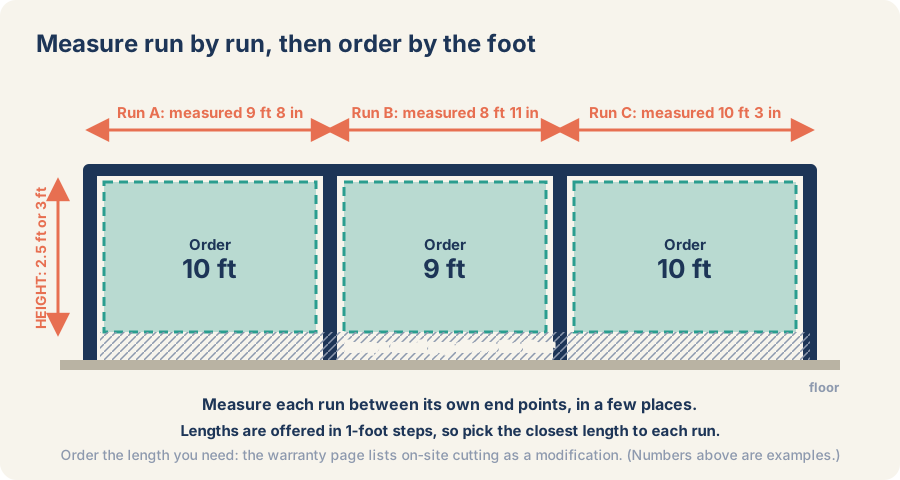
Measure the railing you intend to cover, not the balcony floor. If the railing turns a corner, treat each side as its own run. Use a tape between the end points where you will actually tie, and take the reading in two or three places, because railings and posts are rarely perfectly level.
Because lengths are offered one foot at a time, you can usually land close to your measurement. Choose the nearest length rather than ordering oversize and trimming it. Our Limited Warranty page lists on-site cutting as a modification, and our Shipping & Returns page lists custom-sized fabric among the items that cannot be returned. Both are good reasons to measure twice.
For height, leave a small gap above the floor so rain can drain and leaves do not pile up against the fabric. If a run has a wide post or a top cap, think about where the grommets will fall before you commit. Several short panels are often easier than one long one: they are easier to hang, to replace and to take down when the building needs access.
5. Put it up: parts and steps
Before you start, here is what you are working with. The same number is used for the same part in the drawings and the photos below: 1 panel, 2 grommet, 3 zip tie, 4 railing. The two orange numbers, 5 and 6, are other fasteners our listing mentions.
| No. | In real life | What it does | Where to get it |
|---|---|---|---|
| 1 | 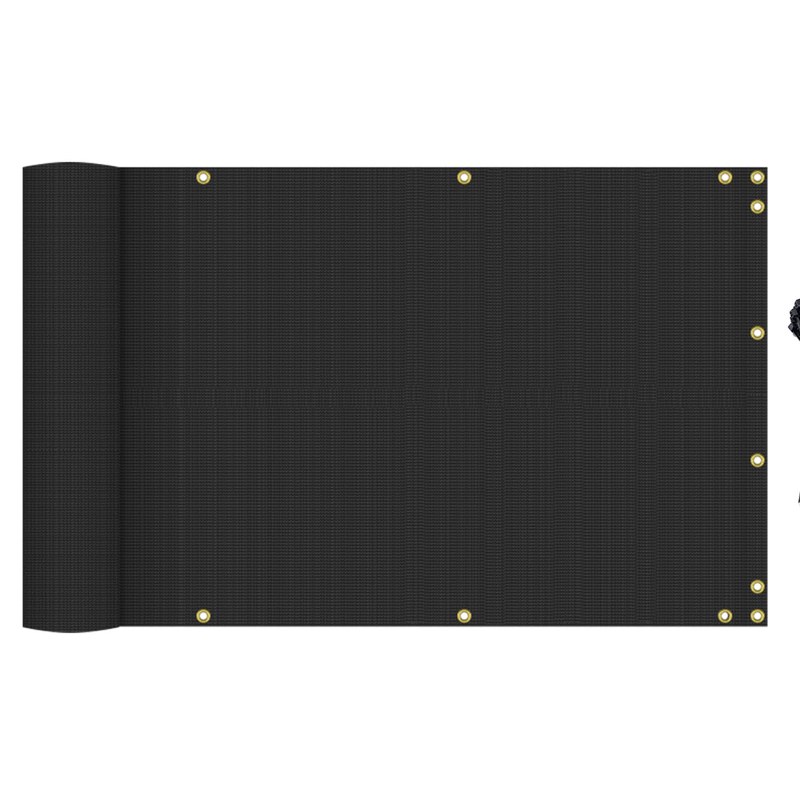 | The breathable mesh panel that filters the view. | Deck privacy screens |
| 2 | 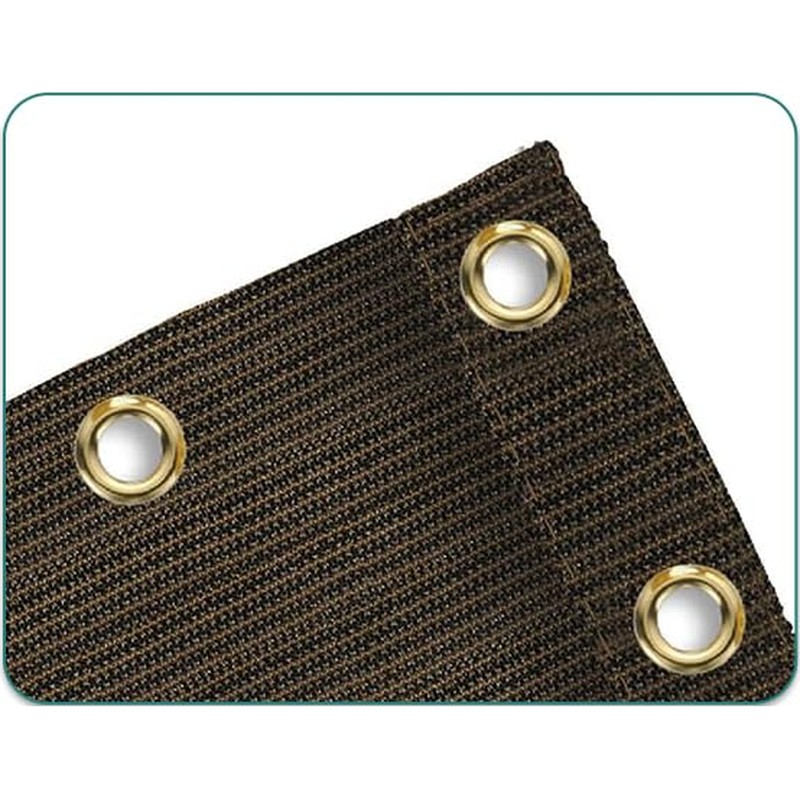 | A reinforced copper eyelet. The product photos show three in every corner, with more along the edges. The tie goes through it. | Built into the panel |
| 3 | 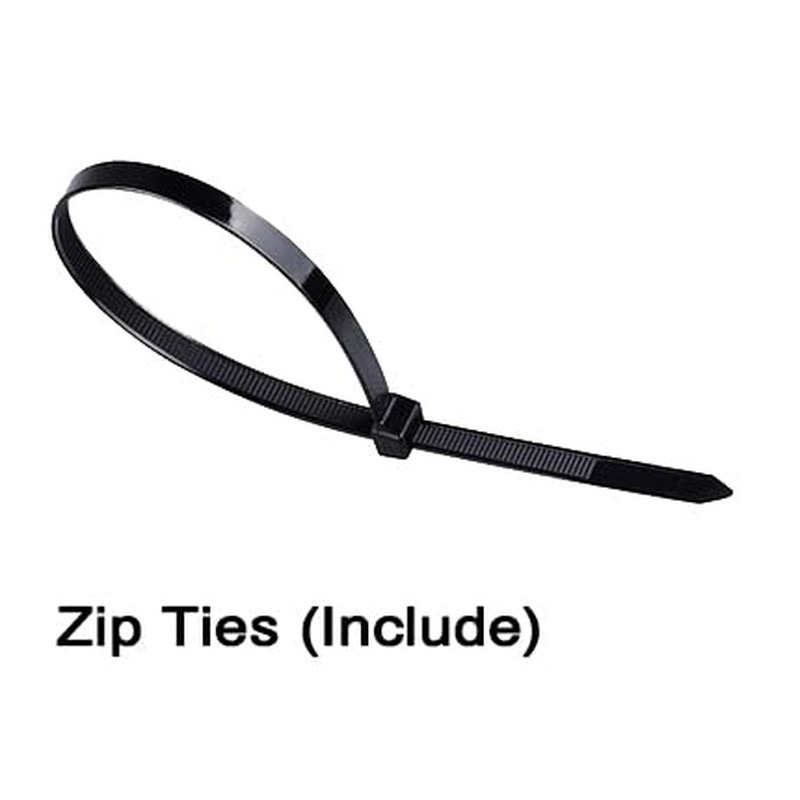 | Loops through a grommet and around the railing. Cut it to remove the screen later. | Comes with the screen |
| 4 | 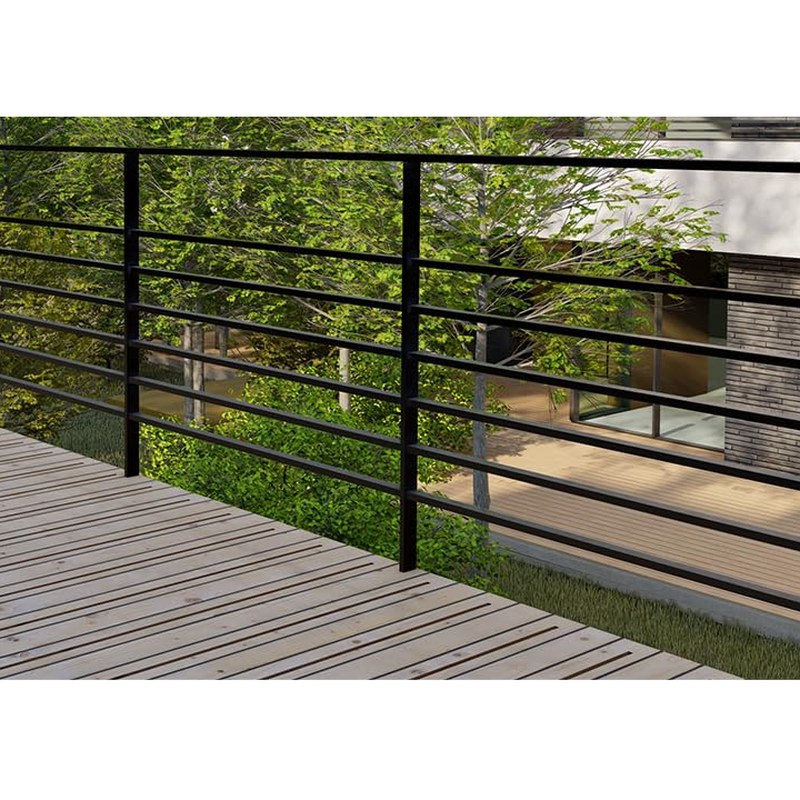 | What you tie to: posts, balusters or the top rail. Check your lease first. | Your balcony |
| 5 | Nylon rope. The product photo shows it next to the zip ties, and the listing says the screen can be installed with zip ties, bungee cords or nylon rope. | Hardware store | |
| 6 | Bungee ball. Same note as the rope: an alternative way to fasten, not something the listing says is in the box. | Hardware store | |
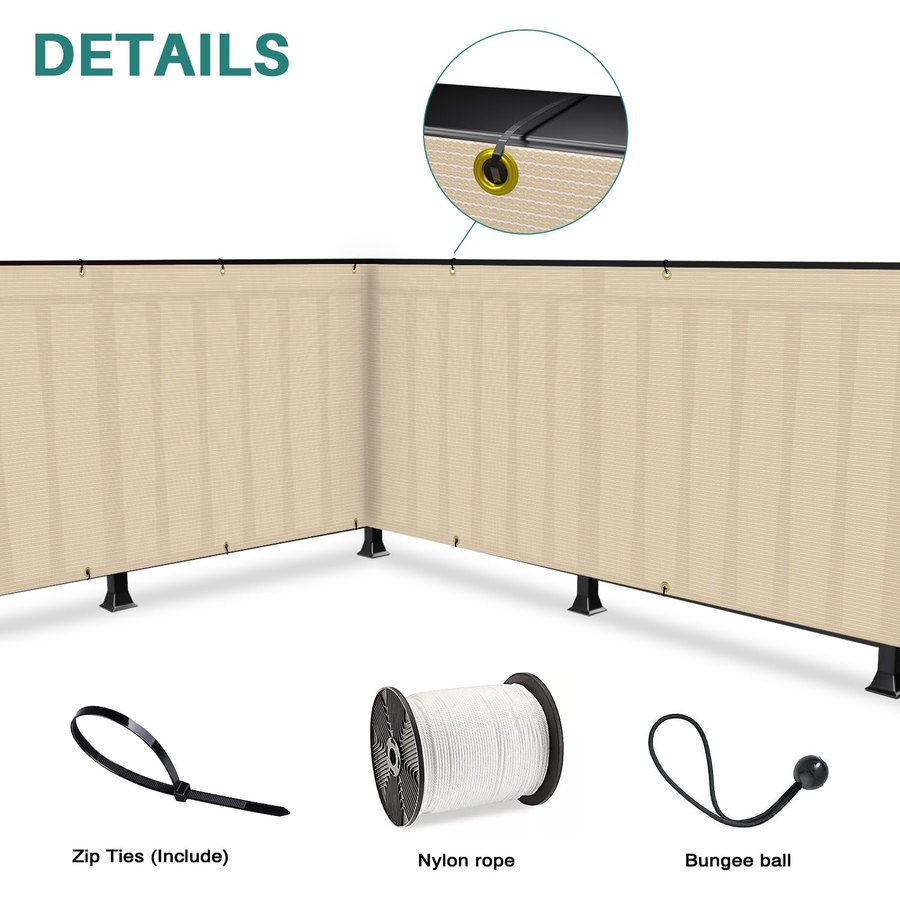 123456
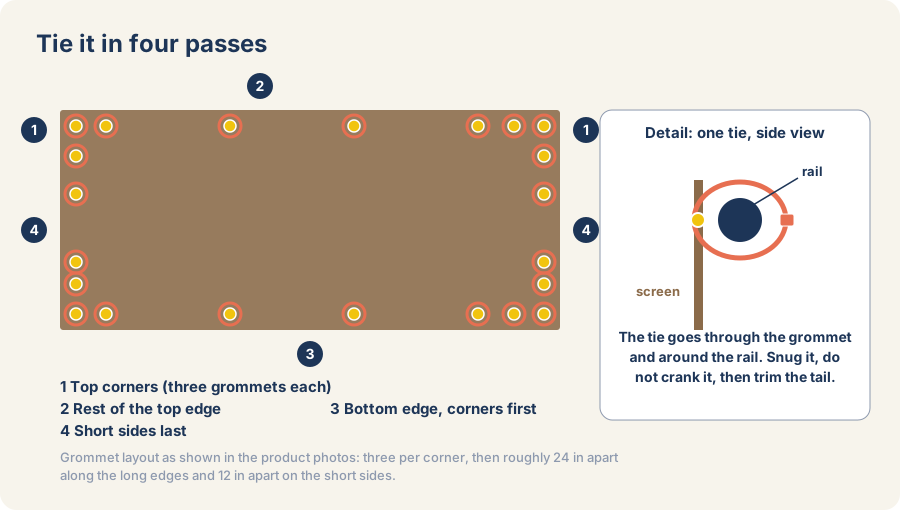
Step by step
- Unroll the screen on the floor for a few minutes, so the roll curl relaxes and it lies flat.
- Hold it against the railing, upright. Tie the two top corners first, through the corner grommets.
- Fill in the rest of the top edge, then work along the bottom, starting at the corners. Add the short sides last.
- Pull each tie snug, not tight. Cranking the fabric as taut as it will go puts the load on a single grommet and can also mark the railing.
- Trim the tails so that none of them points out toward where people walk or lean.
Fasten on all four sides where the railing allows. A screen held only along the top is quicker to hang, but it flaps, sags and wears out sooner. If you plan to take the screen down each winter, rope or bungee balls may be easier to undo than cut ties, but check them from time to time, since stretchy fasteners can loosen.
6. Wind and weather
Wind is the reason most balcony screens fail, and a breathable mesh is the right start: air moves through it instead of pushing the whole panel. Add frequent ties, since every grommet shares the load. After the first windy day, look for loose ties, fabric rubbing on a sharp railing edge, and places where the panel balloons outward. Replace any tie that has gone brittle or cracked, especially after a hot summer.
We do not publish a wind-speed rating for these screens, and you should not assume one. Our Limited Warranty page also states that damage from high winds, including gusts of 40 mph or more, is not covered. When a storm is forecast, take the screen down or follow your building's guidance. On a high floor or an exposed corner, a screen is something you manage, not something you forget.
A heavier or darker screen is not automatically better in wind. Extra material gives the wind more to push on. Here the fabric weight is fixed at 200 GSM, so your control is in the number and spacing of the ties.
7. Cover the right sides
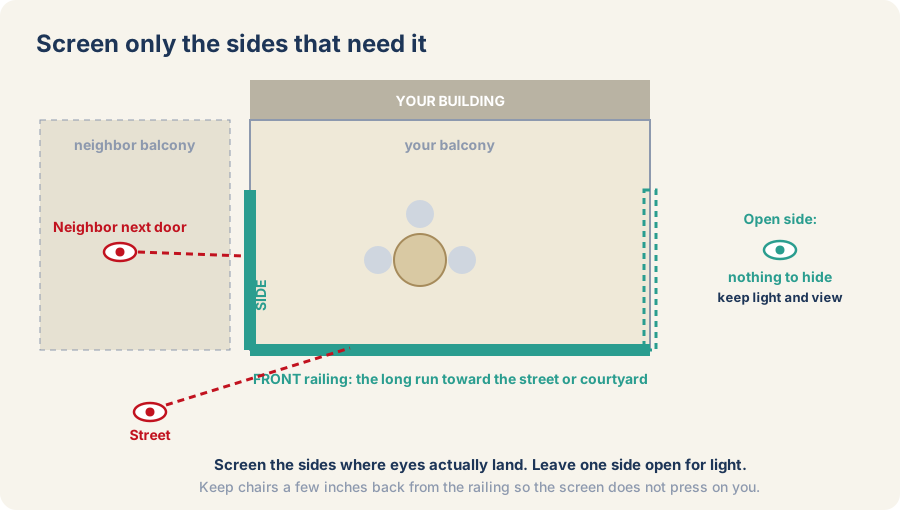
You rarely need to enclose the whole balcony. Often the front run does most of the work, with a short panel on the side that faces a close neighbor. Leaving the far side open keeps light and a view, and it keeps air moving. A fully boxed-in balcony feels smaller and can get warm and damp.
Plants notice the change too. Some like filtered afternoon sun, and some need the direct light the open railing used to let in. Keep chairs and planters a few inches back from the screen, so it does not press on you and the sightline from inside stays pleasant. If shade is the other problem, take a look at our shade sails.
8. Cleaning and upkeep
The listing calls the fabric washable. Dust, pollen and bird droppings gather on it like on outdoor furniture. Start by brushing or shaking off loose dirt. If your building permits a hose, rinse it that way; if not, a soft cloth with mild soap and water does the job. Avoid harsh chemicals and hard scrubbing, and let the screen dry before you roll it up.
While you clean, go along the ties and grommets. A few minutes here keeps a loose corner from turning into a noisy flap that your neighbors will hear too.
9. Pre-order checklist
- Lease or building rules checked, in writing if unclear.
- Something to tie to: posts, balusters or a top rail.
- Sightlines noted, including the ones from above.
- Height chosen: 2.5 ft (30 in) or 3 ft (35 in).
- Each run measured, at least twice, and a length chosen for each.
- Color checked against the building rules.
- Thickest tie point measured, in case longer ties are needed.
Frequently asked questions
Can I install a balcony screen without drilling?
Yes. The screen has grommets, and you fasten it with zip ties around the railing, so there are no holes. Check your lease first. At move-out you cut the ties and the railing is as you found it.
What comes with the screen?
The screen itself, with copper grommets, and zip ties. The listing does not state the tie length or how many are included.
What if the zip ties are too short for my railing?
Use longer zip ties from a hardware store for the thick parts of the railing. Check the thickness before you start.
Can I cut the screen to fit?
We recommend ordering the length you need instead. Lengths are offered in 1-foot steps, and the warranty page counts on-site cutting as a modification.
Will it make my balcony completely private?
No. It is a mesh, which reduces what people can see but is not an opaque wall. People above you can still look over the top, and lights near the railing can show silhouettes at night.
Which height should I choose?
The screens come in 2.5 ft (30 in) and 3 ft (35 in) heights. Measure your railing and decide how much of it you want to cover. Compare both on the deck screens page.
Can I return a custom length?
Our Shipping & Returns page lists custom-sized fabric as exempt from returns, so measure carefully and read the page before you order.